
The Stager's Trick: How Fresh Paint Can Hide $15,000 in Moisture Damage
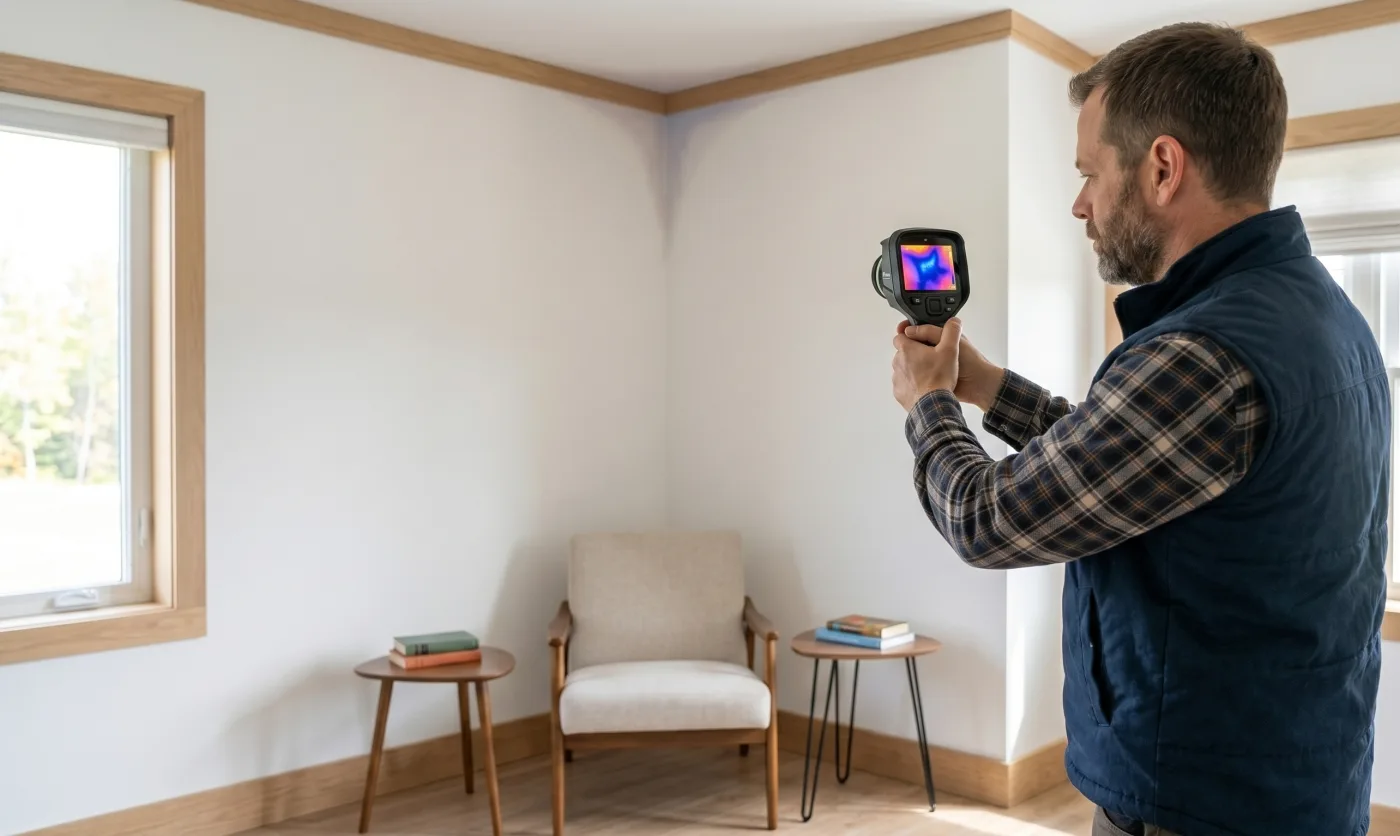
A beautiful showing does not always mean a dry, healthy building envelope. Fresh paint, clean trim lines, and staged decor can make a property feel low-risk in a 20-minute walkthrough. But moisture does not care how polished a room looks. If water pathways are still active, damage continues quietly behind the finish layer while buyers are evaluating paint color and layout.
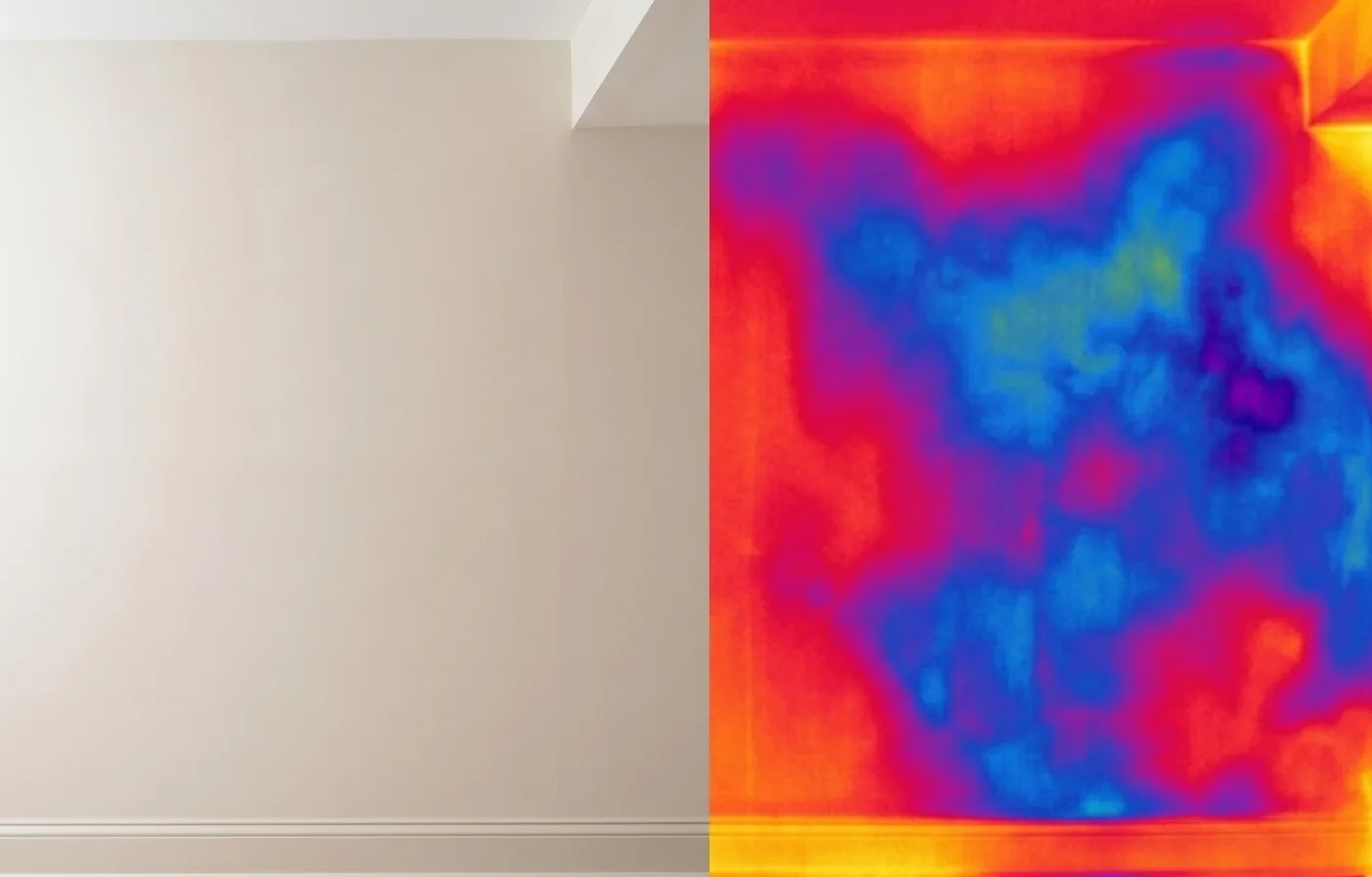
This is where cosmetic strategy can work against you. In fast markets, surface updates are often done to improve first impression and reduce buyer hesitation. A heavy primer or stain-blocking paint can temporarily mute water marks and even suppress microbial odours long enough to carry the property through showings. Without diagnostic tools, the buyer is effectively blind to what is happening inside the wall or ceiling assembly.
New Brunswick conditions amplify this risk. In Fredericton and Oromocto, repeated freeze-thaw cycles, spring freshet pressure, and high seasonal basement humidity create ideal conditions for small envelope defects to become expensive interior damage. A minor weakness in drainage, flashing, ventilation, or roof transition can become a hidden moisture reservoir that keeps worsening after closing.
Why Cosmetic Updates Can Distort Risk Perception
When a house looks newly refreshed, buyers naturally assume the underlying systems were also corrected. Sometimes that is true. Often, it is only partly true. A ceiling stain can be painted without fixing a roof junction. A basement wall can be reframed and drywalled while exterior drainage still pushes moisture toward the foundation. A musty storage room can smell neutral after repainting while the source remains active behind finished surfaces.
The mindset that protects you is simple: use appearance to evaluate style, but use measured evidence to evaluate financial risk. That distinction is what keeps a beautiful home from becoming a first-year budget trap.
How Thermal and Moisture Data Work Together
Thermal imaging is a powerful non-invasive triage tool, but it is not a magic wand. An infrared camera does not directly confirm liquid water. It identifies temperature differentials. Those differentials may indicate moisture, but they can also result from air leakage, insulation voids, or mechanical influences.
That is why moisture verification is mandatory before conclusions are made. The strongest workflow is two-step and disciplined: scan first, verify second, then connect the result to building-envelope context so findings are accurate and actionable rather than speculative.
- Scan first: Use thermal imaging to identify suspicious zones in ceilings, corners, basement wall bases, and attic transitions.
- Verify second: Use moisture meter readings before labeling any area as active water damage.
- Trace cause: Connect interior evidence to likely exterior pathways, such as roof transitions, grading faults, drainage loading, or ventilation imbalance.
- Document clearly: Present findings in plain language that supports negotiation, budgeting, and correction scope decisions.
Where Buyers Miss the Biggest Moisture Costs
The highest repair bills usually come from compounding conditions rather than one dramatic defect. A minor roof transition leak, paired with weak attic ventilation and delayed correction, can gradually create insulation loss, concealed staining, microbial amplification risk, and finish replacement costs. On showing day, the room may still look clean. By the first winter, it can become a major project.
Fredericton-area examples are common. In split-entry homes, newly finished lower levels may look immaculate while the rim-joist zone still shows thermal anomalies from air leakage and moisture cycling. In older downtown properties with stone or rock foundation sections, buyers sometimes see new drywall installed directly over historically damp masonry without an adequate moisture-management assembly. The finish looks premium, but the wall system remains vulnerable.
Hidden moisture also links directly to indoor air quality. When moisture reservoirs remain trapped behind finished surfaces, they can become one of the biggest drivers of elevated indoor airborne spore counts. If your moisture findings indicate concealed dampness, it is smart to consider layered verification through our Indoor Air Quality Testing Service before final commitments.
Buying a Recent Flip in Fredericton or Oromocto?
Always review seller disclosure for roof age, past foundation repairs, and drainage history. Brand-new paint in a basement is not proof of correction—it is a reason to request thermal and moisture evaluation while your due diligence options are still open.
From Pretty Finish to Practical Negotiation Plan
The best due diligence strategy is evidence-first and non-emotional. You do not need to prove a property is defective top to bottom. You need to show where confirmed risk exists, what correction scope is required, and how timing affects first-year ownership cost.
- Prioritize active sources first: Stop water entry before discussing cosmetic restoration scope.
- Budget by sequence: Source correction, then drying and verification, then finish reconstruction.
- Separate now vs. planned: Distinguish immediate corrective items from monitored seasonal follow-up items.
- Set re-check points: Include timeline milestones for confirmation after correction work is completed.

Questions to Ask Before You Remove Conditions
Use these questions as your decision script so your condition-period choices stay practical and defensible:
- Which anomalies are verified active moisture concerns versus non-critical thermal variation?
- What is the most likely source path for each confirmed moisture issue?
- Which corrective items are immediate, and which can be scheduled inside a first-year plan?
- If remediation is required, what evidence should support negotiation scope and credit requests?
- Should we pair this with targeted IAQ sampling where moisture history suggests elevated indoor-air risk?
Your Next Step
Beautiful finishes are valuable, but only when building performance underneath supports them. If a listing looks recently updated and you want confidence before commitments are final, schedule your inspection early and request thermal-plus-moisture verification in the debrief notes.
For full process context, review our Residential Home Inspection service and prepare with our For Buyers guide. If indoor-air concern is part of the moisture picture, our Indoor Air Quality Testing Service can be layered into the same workflow.