
Radon in New Brunswick: The Quiet Risk Most Homebuyers Never Ask About
Radon is not a minor maintenance footnote. It is an invisible health liability, and the only honest way to assess it is with measurement.
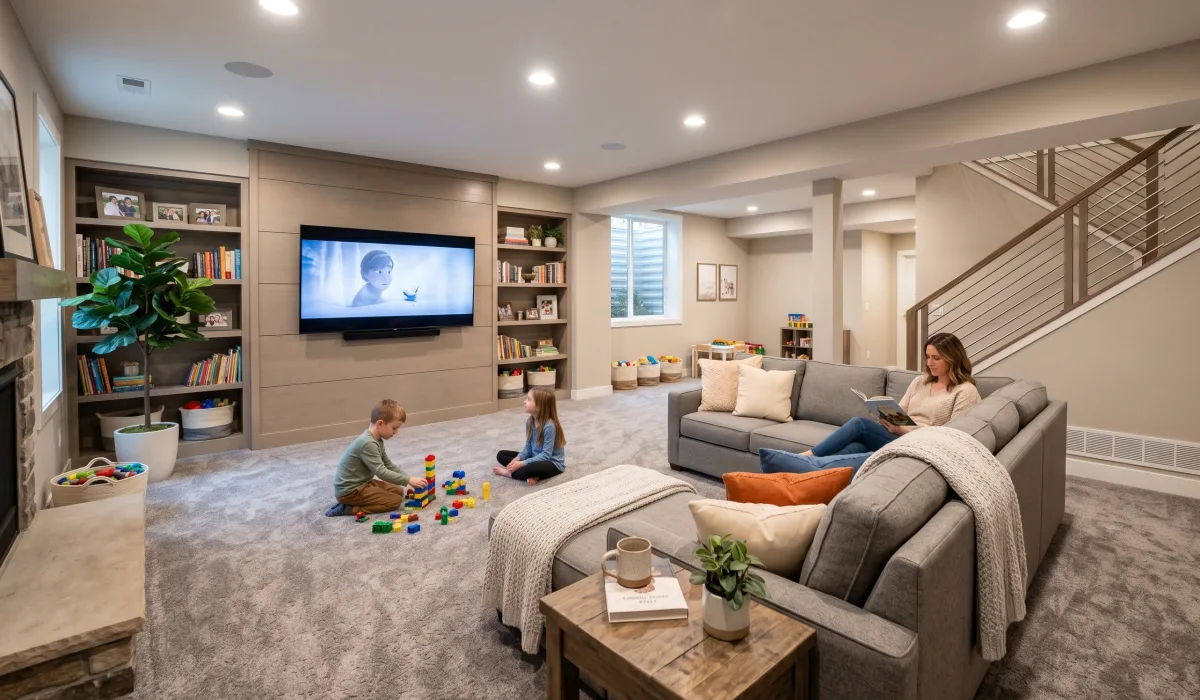
During a purchase, most buyers focus on what they can see: roof age, staining, drainage, furnace condition, and electrical safety. Radon is different. It has no smell, no color, and no visual warning sign during a walk-through. Yet it can accumulate in the very spaces families use most, including finished basements, rec rooms, home offices, and lower-level bedrooms.
Radon comes from the soil. As uranium in rock and soil breaks down, gas can migrate toward foundations. In New Brunswick, granite-rich geology in parts of the province can increase localized potential. That does not mean every home is high. It means every home should be treated as its own measurement case.
Modern airtight construction adds another layer to the story. Efficient homes retain conditioned air better, but they can also retain contaminants when entry pathways are present. If soil gas enters through slab cracks, penetrations, expansion joints, or unsealed sump covers, concentrations can build indoors unless pressure and ventilation are properly managed.
Why Radon Decisions Should Be Data-Driven
Radon decisions should be anchored in numbers, not assumptions. Health Canada's action guideline is 200 Bq/m3 (becquerels per cubic meter). When confirmed levels are above that threshold, remediation is recommended. That benchmark gives buyers and sellers a clear, shared framework:
- Below 200 Bq/m3: continue monitoring as part of long-term home health planning.
- At or above 200 Bq/m3: plan mitigation and post-mitigation verification.
- Well above 200 Bq/m3: prioritize mitigation timeline, then verify with follow-up testing.
Even two homes built side-by-side can produce very different results. Small differences in slab condition, penetrations, drainage layers, and pressure dynamics can change soil-gas entry behavior dramatically. Neighbor data may be interesting context, but it is never a substitute for testing the exact property under contract.
How to Integrate Radon Into Due Diligence
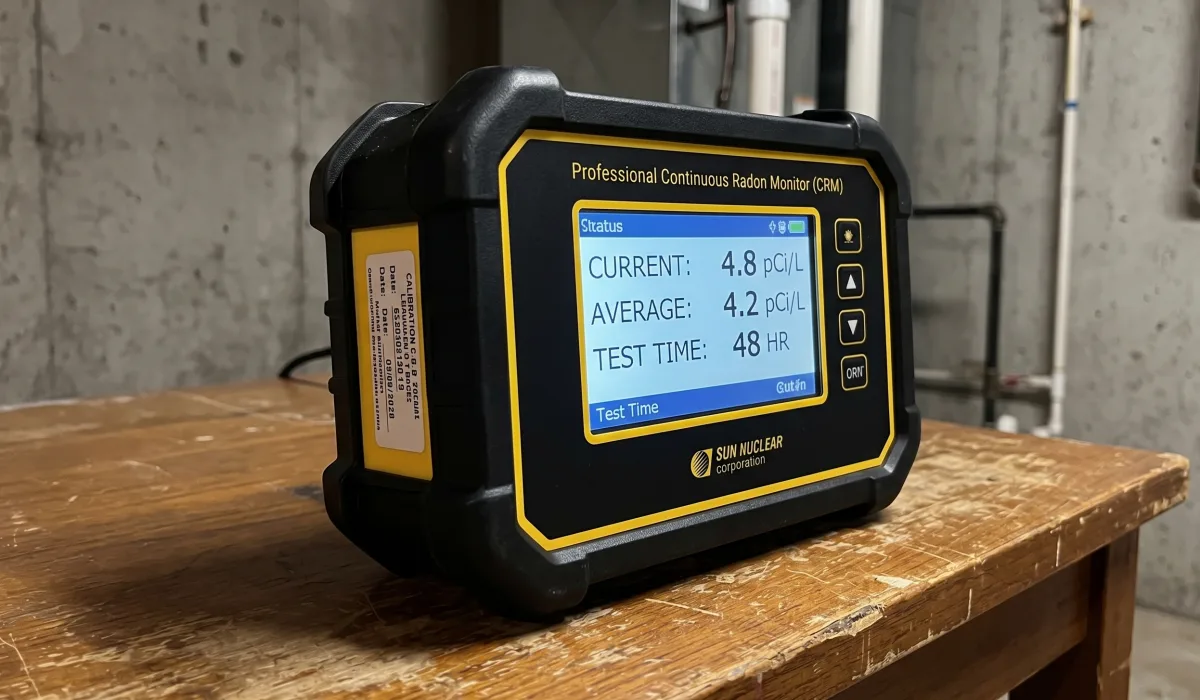
Because radon cannot be seen or smelled, your conditional-period strategy should rely on continuous electronic measurement, not visual observation. In a tight transaction window, that means running a disciplined 48-hour diagnostic protocol, while recognizing that Health Canada's gold standard is a 91-day long-term test.
- Deploy on Day One: place a calibrated continuous radon monitor (CRM) on the lowest livable level as soon as due diligence begins.
- Maintain Closed-House Conditions: keep windows and exterior doors closed during the full 48-hour window so readings reflect stable indoor conditions.
- Analyze Hourly Fluctuations: review pattern changes tied to weather and pressure shifts instead of relying on a single snapshot number.
- Establish the Baseline: compare the final 48-hour average against Health Canada's action threshold of 200 Bq/m3 to determine whether mitigation should be planned.
Use the 48-hour result to guide negotiation and risk decisions before deadlines clear, then follow with a 91-day test after possession for a truer seasonal exposure profile.
Why Levels Spike in Colder Months
Radon levels are not static. In New Brunswick, readings often rise in late autumn and winter because of the stack effect. When heating systems run and windows stay closed, warm air escapes from upper levels and creates slight negative pressure near the foundation. That pressure difference can pull radon-bearing soil gas through slab seams, expansion joints, and unsealed sump openings into living space.
Seasonal physics like this are exactly why generalized neighborhood assumptions can mislead buyers. Property-specific testing remains the only dependable standard.
Questions to Ask Before You Remove Conditions
Use these questions during your inspection debrief to turn air-quality data into clear negotiation and budget decisions:
- Did the 48-hour testing average exceed Health Canada's action threshold of 200 Bq/m3?
- Were closed-house conditions maintained through the full diagnostic window?
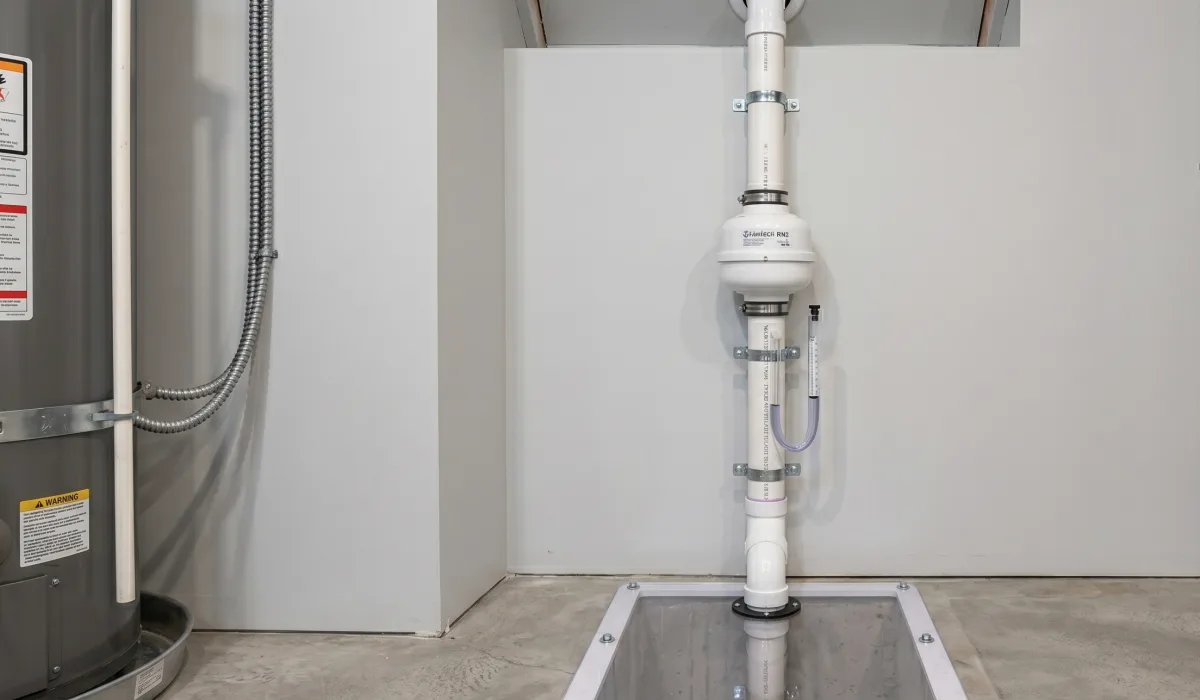
- If levels are elevated, does the home's layout support a straightforward active sub-slab mitigation system?
- Can a seller credit or holdback be negotiated to cover mitigation costs, often in the $1,500 to $3,000 range?
Your Next Step
Radon feels abstract until it is measured. Once you have credible data, the path forward becomes clear.
For most buyers, the easiest approach is to add radon testing to the standard inspection workflow on day one. You get a coordinated process, a clean report package, and enough time to decide whether to proceed, negotiate, or budget for mitigation before conditions are removed.