
InterNACHI CPI
Certified Professional Inspector standards on every inspection.
Fully Insured
You get professional protection and clear documentation.
Technology-Driven
Thermal imaging and digital reporting for better decisions.
7-Day Scheduling
Weekend appointments available to protect short condition windows.
Two Distinct Landscapes, the Same Private-Service Priorities
Douglas and Keswick span from the ridge above the Saint John River down to the valley floor. On the ridge, you will find large-lot acreage properties, orchards, and rural homes priced from the mid-$600s to well over a million. In the valley, the profile shifts toward older river-corridor homes, seasonal cottage conversions brought to year-round use, and properties where spring moisture behaviour is as important as what the structure looks like in July. What unites the whole corridor is that private well water, septic systems, and oil heat are the norm — and none of those systems appear in listing photos.
Douglas & Keswick at a Glance
Property Scale
Larger Lots, Higher Stakes
Douglas acreage and Keswick Ridge properties regularly list from $650K to over $1.3M. Larger lots with orchards, outbuildings, or secondary structures expand the inspection scope significantly beyond the main dwelling.
Service Setup
Private Systems Throughout
Private well water and septic are standard across the corridor. Well chemistry needs lab verification — arsenic and uranium are undetectable without testing — and septic documentation from older builds is frequently incomplete.
Valley vs. Ridge
Two Different Moisture Profiles
River-valley properties face spring ground saturation and elevated water tables. Ridge properties face wind-driven moisture entry and attic condensation from inadequate air sealing. Each needs a different inspection focus.
Heating Profile
Oil Heat Is Still Common
Oil tanks without documentation are a consistent finding in this corridor. Missing records can block insurance or financing — and are far easier to resolve before conditions come off than after.
Common Douglas & Keswick Risk Patterns
Oil Heat Systems with Limited or No Documentation
Oil heat is widespread in both Douglas and Keswick, and many tanks — particularly on older rural properties — lack installation records or inspection certificates. An undocumented tank can block insurance, complicate financing, or generate negotiation pressure that is far simpler to address before you remove your conditions.
Spring Moisture in the Valley, Wind Exposure on the Ridge
Keswick valley properties can experience elevated water tables and ground saturation during spring melt — drainage defects that are invisible in summer. Ridge properties in Douglas and Keswick Ridge face wind-driven moisture entry and attic condensation risks in older building envelopes with inadequate air sealing. Location determines which of these is your primary concern.
Private Well Chemistry and Septic Condition
New Brunswick's geology produces wells with naturally elevated arsenic and uranium — and clear water does not indicate safe water. Across the Douglas and Keswick corridor, well chemistry requires lab verification and septic documentation from older rural builds is frequently incomplete or absent. Both need assessment inside your condition window.
Property Types You Will Encounter in Douglas & Keswick
Douglas Acreage and Orchard Properties
The Douglas community is known for its orchards, large rural lots, and properties that regularly list above $700K. Inspection scope on these properties extends beyond the dwelling to outbuildings, extended utility runs, and site drainage across larger parcels. A home that presents beautifully on a summer listing day can have significant drainage, septic, or private-service issues that only a thorough inspection uncovers.
Keswick Ridge Rural and Acreage Homes
Ridge-top properties in Keswick Ridge attract buyers looking for elevation, privacy, and rural acreage. Older homes in this area have often seen limited investment in heating, insulation, and private-service documentation. The inspection establishes what has been maintained versus what has been left for the next owner — particularly important at higher price points where the condition gap is not always reflected in the ask.
Keswick Valley and Cottage Conversions
River-valley Keswick has a real inventory of former seasonal homes converted to year-round use. The inspection evaluates whether insulation continuity, heating capacity, and plumbing have been brought to the actual demands of cold-climate winter occupancy — a gap that is expensive to discover in January and largely invisible in a summer showing.
Newer Rural Builds Across the Corridor
More recent construction in Douglas and Keswick still warrants quality-control review. Private service setup, lot drainage execution on larger parcels, and attic ventilation are areas where newer builds can underperform — particularly when construction moved fast and site management was treated as secondary to getting the home completed.
What We Focus on in Douglas & Keswick
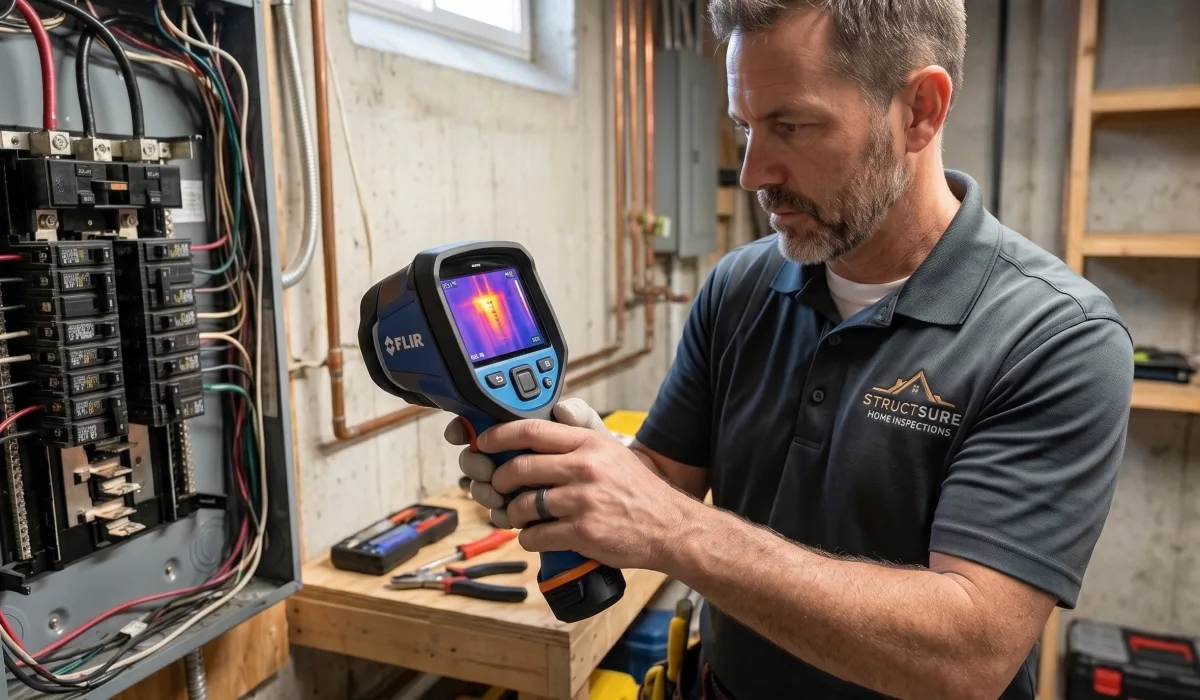
The inspection approach in this corridor adapts to which part of it the property sits in. On a Douglas acreage or Keswick Ridge home, we lead with heating system documentation, attic and envelope performance under wind exposure, and private-service condition. In the Keswick valley, the focus adds spring moisture indicators at the foundation perimeter, drainage behavior on sloped lots, and cottage-conversion adequacy for year-round occupancy. Thermal imaging runs on every inspection and regularly finds moisture already inside the envelope before it appears on any surface.
Inspection-Specific Considerations for Douglas & Keswick
Oil Heat Documentation
Tank age, condition, and documentation directly affect insurance eligibility on rural properties. Knowing the status before conditions come off gives you options — discovering it after does not.
Read the oil tank guidePrivate Well Water Testing
Lab chemistry results for arsenic, uranium, and bacteria are the only way to verify private water quality. Clear water does not mean safe water — and assumptions are not due diligence.
Read the well water guideRadon Risk in NB
Radon cannot be detected by sight or smell and risk cannot be inferred from location or housing age. Testing is the only way to establish what levels exist in the specific home you are buying.
Read the radon guideUnderstanding Your Inspection Report
- Start with the summary and identify safety or structural items first.
- Separate immediate repairs from maintenance items you can plan over time.
- Request quotes for high-impact defects before making final decisions.
- Review priorities with your inspector so your next steps are clear and realistic.

Services That Work Together
Rural Douglas and Keswick properties carry private-service risk that is best addressed together. This combination covers the highest-cost blind spots in a single appointment window:
- Residential Home Inspection
- Thermal Imaging Inspection
- Well Water Testing
- Indoor Air Quality Testing
All services can be scheduled together to minimize disruption and maximize your due diligence window efficiency.
What Is Included in Every Inspection
- Structure, foundation, and visible framing
- Exterior cladding, grading, and drainage indicators
- Roofing, flashing, and accessible attic conditions
- Insulation and ventilation performance checks
- Electrical panels, visible wiring, and safety defects
- Plumbing fixtures, visible supply/drain components
- Heating and cooling equipment condition overview
- Interior surfaces, windows, doors, and moisture clues
- Safety and function observations by transaction impact
- Clear digital report with photo-backed prioritization
Resources for Douglas & Keswick Buyers
NB Well Water Contaminant Guide
How to handle arsenic and uranium testing so private-well purchases stay evidence-based and your decisions reflect actual water quality.
Read articleOil Tank Risk and Insurance
How to evaluate tank age and documentation before underwriting requirements or remediation costs appear after closing.
Read articleWinter Risk and Ice Dam Reality
What to look for in roof and attic performance before insulation and ventilation gaps create winter-driven moisture damage.
Read articleBooking and Inspection Timeline
1. Book
Book early — well water lab results take 3–5 business days and need to arrive before your condition deadline.
2. Inspect
On-site visual and diagnostic review of the home, private systems, and site drainage — all in one appointment.
3. Report
Receive clear, photo-backed findings organized by urgency and transaction impact — same day in most cases.
4. Decide
Use your report and debrief to negotiate, budget, or proceed with confidence before the deadline closes.
Weekend appointments are available for buyers working within short condition windows.
Frequently Asked Questions
Listing history and permits can provide clues, but the inspection looks for physical evidence: inconsistent insulation depths, undersized heating systems, plumbing that suggests non-winterized origins, and electrical setups that predate year-round load requirements. We flag these during the walkthrough regardless of what the listing says.
It can be. Many insurers require documentation of a tank's age, type, or decommissioning before they will bind coverage on rural properties. If the seller cannot produce records, that becomes a negotiation point — and one you want identified while you still have the leverage to act on it, not after you've committed.
Yes. Thermal imaging, well water sampling, and indoor air quality testing can all run concurrently with the main inspection in most cases — which matters when your condition deadline is firm and you need a complete picture from a single appointment.
It is a factor worth understanding, not necessarily a reason to walk away. The inspection evaluates foundation drainage indicators and moisture history so you can make an informed decision based on the specific property — not a general assumption about the area. Knowing what you are buying is the point.
Elevated ridge properties are more vulnerable to wind-driven moisture entry and attic condensation from inadequate air sealing. We pay particular attention to roof edge, soffit, and gable-end conditions on Douglas and Keswick Ridge properties — these are the areas where building envelope failures most often start on exposed rural homes.
Yes. Radon risk exists across New Brunswick regardless of location, housing age, or how the home presents. Testing is the only way to verify levels in the specific home you are buying — not the street, the area, or a neighbour's result.
Yes. Weekend scheduling is available and is often the most practical option for buyers managing short condition windows from outside the immediate area.
Meet Your Inspector
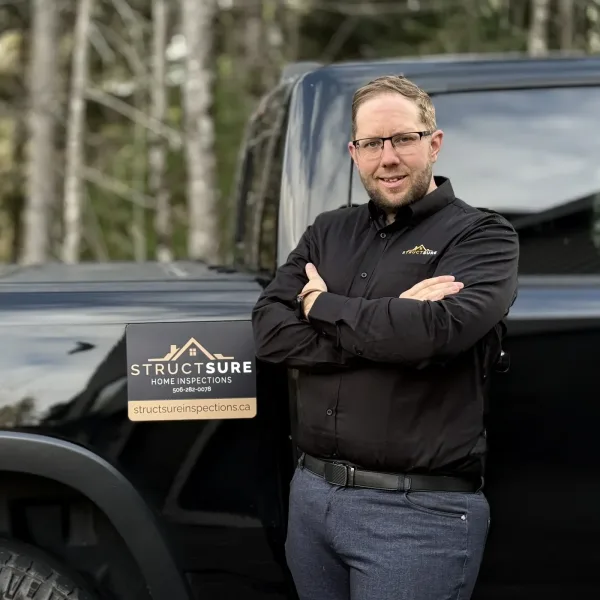
I am Nick Clark, InterNACHI Certified Professional Inspector at StructSure. My goal is simple: give you clear facts before your condition window closes, so you can move forward with confidence instead of guesswork.
I focus on practical guidance, not scare tactics. If you want more background on how I work and why, visit About StructSure.
Book Your Douglas & Keswick Inspection
Get clear priorities, report-backed negotiation leverage, and a practical decision path before your purchase is final.