
InterNACHI CPI
Certified Professional Inspector standards on every inspection.
Fully Insured
You get professional protection and clear documentation.
Technology-Driven
Thermal imaging and digital reporting for better decisions.
7-Day Scheduling
Weekend appointments available to protect short condition windows.
Buying in the Burton and Geary Corridor: What to Evaluate First
The corridor between Oromocto and the rural communities of Burton and Geary draws buyers for the same reasons: more space, lower prices, and a slower pace than city living. What those advantages don't change is the due diligence work required. Private services, older heating systems, and varied lot drainage conditions mean the inspection has real work to do on most properties in this area — and the window to act on what it finds is usually short.
Burton & Geary at a Glance
Corridor Profile
Two-Community Service Area
Burton and Geary include varied lot types and property ages, so assumptions from one street may not fit the next.
Private Services
Well and Septic Due Diligence
Private systems are common enough that water chemistry and septic evidence should be prioritized early in conditions.
Heating Consideration
Oil Tank Verification
Tank age and condition can affect both insurance eligibility and the negotiation strategy for rural and edge-area homes.
Buyer Profile
Military Postings Are Common
CFB Gagetown — Canada's second-largest military base — is nearby. Military families on firm posting timelines often need inspections booked fast, with add-ons bundled into one appointment.
Common Burton & Geary Risk Patterns
Private Well Quality on Corridor Properties
Most properties in Burton and Geary use private well water. New Brunswick geology produces naturally elevated arsenic and uranium concentrations in some wells — undetectable without lab testing and not something a visual inspection can assess. Testing should happen in the first days of your condition window.
Oil Tank Documentation Gaps
Oil heat remains common in the rural Sunbury County area, and many tanks in older homes lack service records or installation documentation. An undocumented tank can block financing or insurance until it is evaluated — a problem that surfaces at the worst time if not caught during due diligence.
Drainage and Foundation Exposure on Flat Lots
Corridor properties often sit on flatter terrain where natural drainage is slower. Without deliberate grading and proper downspout management, spring melt and rain accumulates near foundation walls. NB's freeze-thaw cycles then amplify any existing drainage weakness year after year.
Property Types You Will Encounter in Burton & Geary
Older Village-Core Homes in Burton and Geary
The older residential pockets in both communities often include homes with original oil heat, private wells, and aging electrical panels. These are high-priority items for insurability and first-year cost planning — and they need to be evaluated while conditions are still active.
Highway-Corridor Rural Properties (1970s–2000s)
Properties along the Trans-Canada corridor in this area vary significantly in age and condition. Roofing, insulation, and mechanical systems from this era are approaching or past typical service-life windows, and private septic systems from this period are frequently underdocumented.
Acreage and Hobby Farm Properties
Rural parcels in Sunbury County often include outbuildings, secondary structures, and extended utility runs that add scope to any inspection. Drainage across larger lots and septic system sizing relative to actual occupancy are both areas worth specific attention.
Newer Builds Near Oromocto
More recent construction in the corridor can still carry grading, ventilation, and service-connection issues that are easy to miss at a showing. For buyers on a short timeline — including military families with firm posting dates — having clear findings in hand before conditions close removes significant uncertainty.
What We Focus on in Burton and Geary
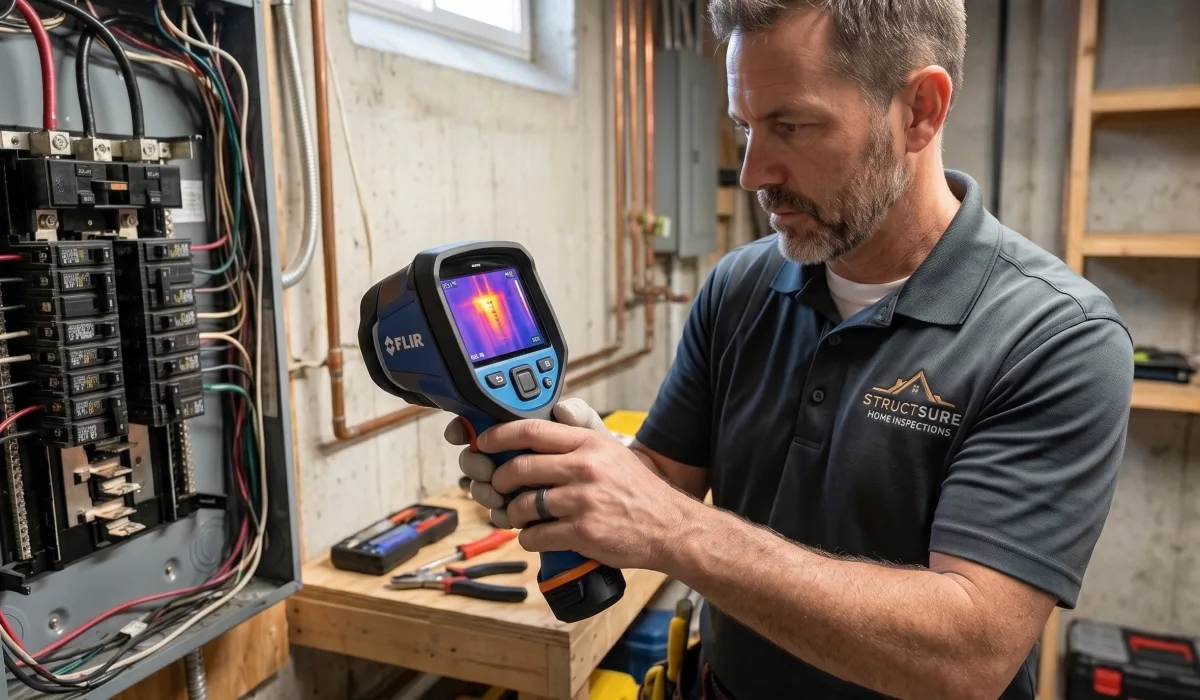
In Burton and Geary, the inspection pays close attention to oil tank documentation and visual condition, well and septic system review, and foundation drainage on flatter rural lots. Thermal imaging is standard on every inspection and helps identify moisture entry points and insulation weak spots that aren't visible to a standard walkthrough — particularly relevant in older rural homes where deferred maintenance accumulates quietly.
Inspection-Specific Considerations for the Burton & Geary Area
Oil Heat Transitions
Older heating transitions can include active or decommissioned tank concerns that affect insurance and remediation planning.
Read the oil tank guideRadon Risk in NB
Radon cannot be detected by sight or smell. Testing provides measurement-based clarity before closing decisions are final.
Read the radon guideWell Water Due Diligence
Where private water systems are present, lab-backed testing can identify contaminants early and protect negotiation leverage.
Read the well water guideUnderstanding Your Inspection Report
- Start with the summary and identify safety or structural items first.
- Separate immediate repairs from maintenance items you can plan over time.
- Request quotes for high-impact defects before making final decisions.
- Review priorities with your inspector so your next steps are clear and realistic.

Services That Work Together
For Burton and Geary buyers, the most valuable add-ons target private service risk and envelope condition — the areas most likely to generate unexpected first-year costs:
- Residential Home Inspection
- Thermal Imaging Inspection
- Well Water Testing
- Indoor Air Quality Testing
All services can be scheduled together to minimize disruption and maximize your due diligence window efficiency.
What Is Included in Every Inspection
- Structure, foundation, and visible framing
- Exterior cladding, grading, and drainage indicators
- Roofing, flashing, and accessible attic conditions
- Insulation and ventilation performance checks
- Electrical panels, visible wiring, and safety defects
- Plumbing fixtures, visible supply/drain components
- Heating and cooling equipment condition overview
- Interior surfaces, windows, doors, and moisture clues
- Safety and function observations by transaction impact
- Clear digital report with photo-backed prioritization
Resources for Burton & Geary Buyers
Rural Septic Warning Signs
A fast checklist for spotting high-risk septic conditions before they become expensive ownership surprises.
Read articleOil Tank Closing Risk in NB
How oil tank findings can impact insurance bind timelines and change your negotiation position.
Read articleFirst-Time Buyer Inspection Workflow
How to triage findings, quotes, and decisions quickly when your condition period is tight.
Read articleBooking and Inspection Timeline
1. Book
Secure your date early to protect room for add-ons and follow-up decisions.
2. Inspect
On-site visual and diagnostic review focused on high-impact transaction risks.
3. Report
Receive clear, photo-backed findings organized by urgency and transaction impact.
4. Decide
Use your report and debrief to negotiate, budget, or proceed with confidence.
Weekend appointments are available for clients working within short condition windows.
Frequently Asked Questions
Yes. Most of our add-on services — thermal imaging, well water sampling, and indoor air quality testing — can run concurrently with the main inspection. Weekend scheduling is also available. Book immediately after offer acceptance to give yourself the most working time before your deadline.
In most cases, yes, which helps keep your inspection workflow efficient and timeline-safe.
Yes. Findings are structured by urgency and transaction relevance.
Yes. Pre-listing inspections help reduce surprises and increase transaction stability.
Yes. Radon risk exists across New Brunswick and testing is the only way to verify levels in the specific home you are buying.
Yes. Weekend scheduling is available and often helps buyers stay on track during short due-diligence windows.
Yes. Working and insurable are two different things. Older tanks without documentation can prevent financing or insurance from being bound — regardless of whether the system is currently functional. Knowing the tank's status before conditions are removed gives you time to negotiate a resolution rather than scrambling at closing.

Meet Your Inspector
I am Nick Clark, InterNACHI Certified Professional Inspector at StructSure. My goal is simple: give you clear facts before your condition window closes, so you can move forward with confidence instead of guesswork.
I focus on practical guidance, not scare tactics. If you want more background on how I work and why, visit About StructSure.
Book Your Burton and Geary Inspection
Get clear priorities, report-backed negotiation leverage, and a practical decision path before your purchase is final.