
InterNACHI CPI
Certified Professional Inspector standards on every inspection.
Fully Insured
You get professional protection and clear documentation.
Technology-Driven
Thermal imaging and digital reporting for better decisions.
7-Day Scheduling
Weekend appointments available to protect short condition windows.
Why Hanwell Buyers Need More Than a Standard Checklist
Hanwell was a farming community before two large residential subdivisions went in during the 1970s, and it has been adding new development ever since. That layered history means you can find a 1970s bungalow on a former agricultural lot sitting two streets from a current-build home in Eagle Ridge — where lots run 1.5 to 4 acres. The risk profile shifts dramatically between those two properties, and a generic inspection approach won't catch what matters in each. StructSure focuses on the specifics: grading and runoff behavior on larger lots, private water and wastewater condition, ventilation transitions in mixed-era construction — so your report is useful the day you need to make a call.
Hanwell at a Glance
Housing Pattern
Rural-Lot Mix
Eagle Ridge lots run 1.5 to 4 acres. Combined with the older subdivision pockets on smaller private lots, inspection priorities shift significantly by location and era.
Service Profile
Private Well and Septic Common
Many properties rely on private water and wastewater systems, making sampling records and septic condition more transaction-critical.
Moisture Priority
Spring Thaw Exposure
Sloped sites and runoff patterns in shoulder seasons can elevate basement moisture and grading defects if water control is weak.
Energy and Air
Ventilation Checks Matter
Mixed construction eras in Hanwell mean attic airflow and insulation transitions are common drivers of winter condensation risk.
Common Hanwell Risk Patterns
Sloped Lot Drainage and Basement Exposure
Many Hanwell properties sit on sloped terrain where surface runoff can direct water toward foundations. Grading defects that look minor in summer often produce recurring moisture pressure during spring thaw and heavy rain events.
Private Well and Septic Uncertainty
A significant portion of Hanwell properties still rely on private water and wastewater systems. Without lab testing and system-condition review, buyers often carry unknown risk into the first year of ownership.
Attic Ventilation Gaps in Mixed-Era Builds
Rapid development has produced a patchwork of construction eras in Hanwell. Attic airflow transitions, mismatched insulation depths, and inadequately sealed assemblies are common sources of winter condensation and insulation performance loss.
Property Types You Will Encounter in Hanwell
Farming-Era and Pre-Subdivision Properties (Pre-1970)
Before the 1970s developments arrived, Hanwell was a farming community. Homes from that era often retain original private wells, aging septic systems, and oil heat on agricultural-style lots. These are three of the highest-cost first-year risks if not properly evaluated before conditions are removed.
1980s–1990s Hanwell Subdivisions
This era of development produced homes where original roofing, electrical capacity, and plumbing are reaching the end of typical service life. Inspection focus shifts to remaining useful life and prioritizing which systems need near-term budgeting.
2000s–2010s Growth-Phase Builds
These homes look newer but still require quality-control review. Common issues include grading defects on sloped lots, attic ventilation gaps from rushed construction, and drainage systems that were undersized for how the lots actually perform in wet seasons.
Estate and Large-Lot Builds (Eagle Ridge and Similar)
Homes on 1.5 to 4-acre lots bring additional inspection scope. Extended lot drainage paths, larger grading areas, and private services that serve a bigger footprint all need attention — particularly in properties where site management has been inconsistent with the lot size.
What We Focus on in Hanwell
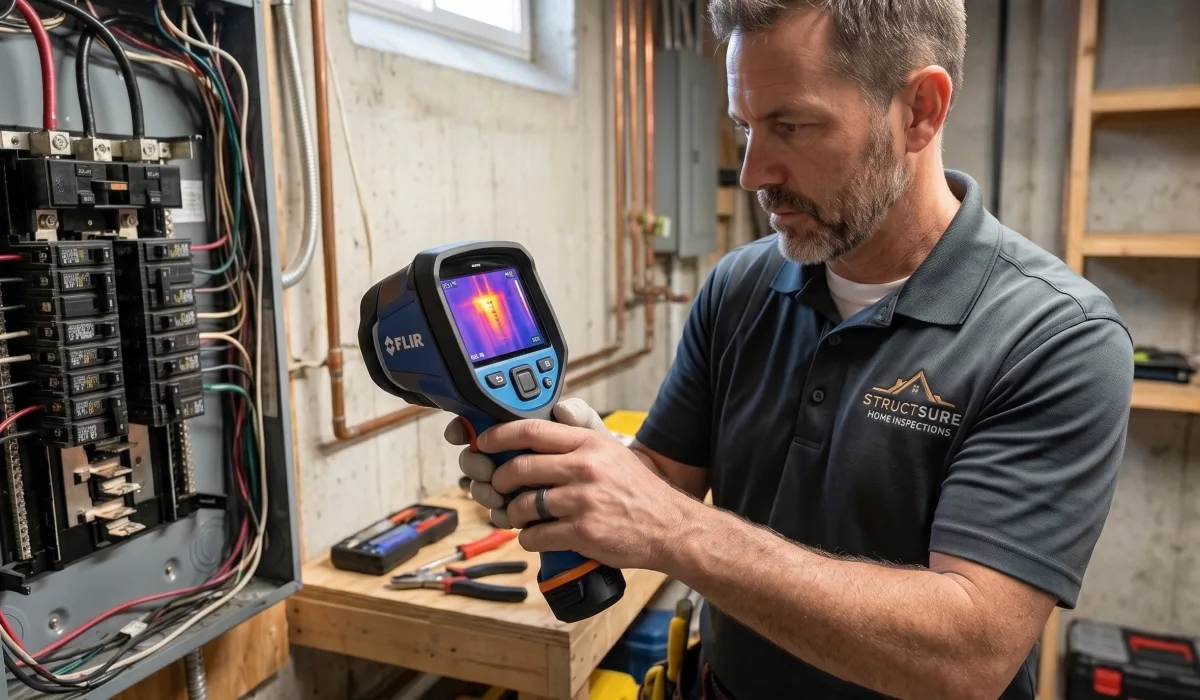
On Hanwell properties, the inspection zeroes in on lot drainage and grading before anything else — a sloped site with grading failures can produce moisture problems that take years to surface visually. From there we evaluate private system records and condition, attic ventilation behavior, and heating equipment age. Thermal imaging is standard equipment on every visit and helps surface what grading and insulation issues can hide from a walkthrough.
Inspection-Specific Considerations for Hanwell
Oil Heat Transitions
Older heating transitions can include active or decommissioned tank concerns that affect insurance and remediation planning.
Read the oil tank guideRadon Risk in NB
Radon cannot be detected by sight or smell. Testing provides measurement-based clarity before closing decisions are final.
Read the radon guideWell Water Due Diligence
Where private water systems are present, lab-backed testing can identify contaminants early and protect negotiation leverage.
Read the well water guideUnderstanding Your Inspection Report
- Start with the summary and identify safety or structural items first.
- Separate immediate repairs from maintenance items you can plan over time.
- Request quotes for high-impact defects before making final decisions.
- Review priorities with your inspector so your next steps are clear and realistic.

Services That Work Together
Hanwell properties with private services carry layered risk. Pairing these services in one appointment protects your decision window and avoids scheduling separate follow-up visits during a tight conditional period:
- Residential Home Inspection
- Thermal Imaging Inspection
- Well Water Testing
- Indoor Air Quality Testing
All services can be scheduled together to minimize disruption and maximize your due diligence window efficiency.
What Is Included in Every Inspection
- Structure, foundation, and visible framing
- Exterior cladding, grading, and drainage indicators
- Roofing, flashing, and accessible attic conditions
- Insulation and ventilation performance checks
- Electrical panels, visible wiring, and safety defects
- Plumbing fixtures, visible supply/drain components
- Heating and cooling equipment condition overview
- Interior surfaces, windows, doors, and moisture clues
- Safety and function observations by transaction impact
- Clear digital report with photo-backed prioritization
Resources for Hanwell Buyers
Well Water Risks You Cannot See
Why clear well water can still carry arsenic or uranium and how to test early in your condition window.
Read articleRural Septic Red Flags
Key warning signs that a private system may become a major first-year expense for buyers.
Read articleWinter Risk and Ice Dam Reality
How insulation and ventilation weak points create preventable winter moisture damage in NB homes.
Read articleBooking and Inspection Timeline
1. Book
Secure your date early to protect room for add-ons and follow-up decisions.
2. Inspect
On-site visual and diagnostic review focused on high-impact transaction risks.
3. Report
Receive clear, photo-backed findings organized by urgency and transaction impact.
4. Decide
Use your report and debrief to negotiate, budget, or proceed with confidence.
Weekend appointments are available for clients working within short condition windows.
Frequently Asked Questions
Yes. Private well water should be lab tested for contaminants including arsenic and uranium, and the septic condition should be evaluated while you still have time to negotiate. These are two of the highest-cost surprises for Hanwell buyers in the first year of ownership.
In most cases, yes, which helps keep your inspection workflow efficient and timeline-safe.
Yes. Findings are structured by urgency and transaction relevance.
Yes. Pre-listing inspections help reduce surprises and increase transaction stability.
Yes. Radon risk exists across New Brunswick and testing is the only way to verify levels in the specific home you are buying.
Yes. Weekend scheduling is available and often helps buyers stay on track during short due-diligence windows.
Sloped lots require closer attention to grading direction, downspout termination, and window well drainage. Water that pools against a foundation wall in spring doesn't always show up as an obvious stain — it shows up as a repair bill two years later.

Meet Your Inspector
I am Nick Clark, InterNACHI Certified Professional Inspector at StructSure. My goal is simple: give you clear facts before your condition window closes, so you can move forward with confidence instead of guesswork.
I focus on practical guidance, not scare tactics. If you want more background on how I work and why, visit About StructSure.
Book Your Hanwell Inspection
Get clear priorities, report-backed negotiation leverage, and a practical decision path before your purchase is final.