
Buying an Older Fredericton Home? Why a Sewer Scope Can Save You Thousands

The expensive part of a character home purchase is often the part you cannot see. A property can present beautifully above grade and still carry a deteriorating sewer lateral underground. If that buried line fails after closing, the correction is not a minor service call. It can become a multi-trade repair involving excavation, permits, restoration, and a major first-year budget hit.
In Fredericton, local infrastructure boundaries are critical. The city is generally responsible for municipal services in the street and up to the property boundary. The homeowner is typically responsible for the private sewer lateral from the property boundary into the home. Buyers frequently assume "city sewer" means full municipal responsibility. It does not. On many older properties, the highest underground liability remains private.
This is why sewer scope is high-value due diligence during your real estate transaction window. A camera inspection gives you direct visual evidence of interior pipe condition before commitment is final. Instead of relying on assumptions from curb appeal, renovation quality, or seller confidence, you are assessing actual structural and flow condition in the line that serves the house every day.
Fredericton neighborhood context matters. In older areas such as the Town Plat, Waterloo Row corridors, and other mature-tree streets, buried line defects are not theoretical. They are common. Tree root intrusion, aging joints, interior scaling, offset sections, and localized collapses can all exist in homes that otherwise appear exceptionally well maintained.
Why Sewer Scope Is a Major-Risk Filter
Sewer laterals are hidden infrastructure, and hidden infrastructure creates the most expensive surprises. A showing confirms design, finishes, and room layout. It does not confirm whether wastewater can move reliably from the home to municipal connection without recurring blockage risk.
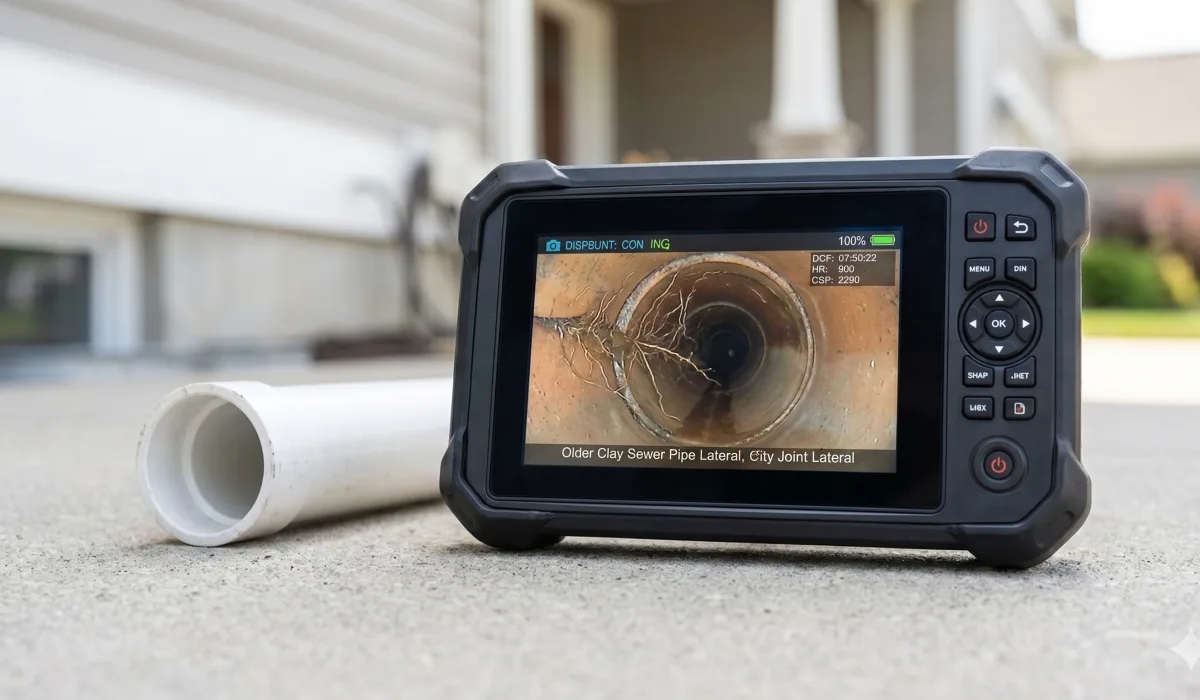
For character homes built before 1980, a sewer scope is the only non-invasive method to verify structural integrity. Older line materials and connection methods are far more vulnerable to age-related failure than modern installations. Clay tile can crack and separate at joints. Cast iron can corrode, scale, and lose interior diameter over time. Orangeburg (bituminized fiber pipe), where present, can deform and deteriorate under soil load and moisture cycling.
Failure mechanics are straightforward and expensive. Mature tree roots seek moisture and nutrient flow. They enter through small joint gaps, hairline fractures, or weakened seams, then thicken over time. What begins as fine root intrusion can become dense masses that trap solids, reduce flow, and eventually trigger severe blockage or structural pipe compromise. At that stage, buyers are no longer discussing "maintenance." They are discussing active infrastructure correction.
This is exactly why sewer scope functions as a major-risk filter. It does not just detect defects. It clarifies whether the line is serviceable now, vulnerable in the near term, or likely to require immediate corrective planning as part of your purchase strategy.
How to Use Scope Findings Before Closing
The strongest sewer scope workflows are not "camera for camera's sake." They are decision frameworks that translate underground findings into practical action before your negotiation leverage expires. A useful report should identify where the defect is, what the defect means, and what the likely correction path looks like in real ownership terms.
- Confirm: Establish exactly what is present - root intrusion, offsets, fractures, bellies, scaling, debris loading, or partial blockage points.
- Classify: Separate informational comments from true defects, then prioritize defects as maintenance items, recommendations, or critical serviceability concerns.
- Tie: Link findings to realistic correction pathways such as jetting/cleaning, localized repair, trenchless rehabilitation, or full replacement depending on severity and location.
- Protect: Use your due diligence period to secure contractor opinion and budget range so decisions are evidence-based before the transaction becomes unconditional.
That sequence keeps the process calm and defensible. You are not reacting emotionally to a technical video. You are converting findings into a clear infrastructure strategy while timelines are still on your side.
Negotiation Strategy for Underground Defects
When underground defects are documented clearly, negotiations become faster and more productive. Sellers, agents, and contractors respond better to objective footage and defined scope than to broad risk statements. Your goal is not to dramatize findings. Your goal is to establish practical correction obligations with supporting evidence.
- Prioritize service continuity: address defects likely to trigger near-term backup, restriction, or non-performance first.
- Request specific outcomes: repair scope, corrective work plan, or realistic credit based on contractor estimate range.
- Keep the evidence package: footage, defect notes, and location context should support quoting and final scope decisions.
- Plan post-closing ownership: moderate-wear lines should have a defined maintenance and re-check schedule from day one.
Street Excavation Reality Check
A main lateral replacement can involve driveway cuts, lawn and landscaping disruption, municipal sidewalk or right-of-way permits, and multiple contractor stages for full reinstatement. Typical costs often land in the $5,000 to $15,000+ range depending on depth, access, and material scope. This is exactly why pre-closing scope evidence protects your budget and leverage.

Questions to Ask Before You Remove Conditions
Use this as your decision script when sewer defects are identified during your transaction window:
- Which findings are informational versus true defects that change serviceability or budget exposure?
- Are priority defects maintenance items, recommendations, or immediate-critical correction concerns?
- What correction path is most likely for each key defect: cleaning, spot repair, lining, or replacement?
- What budget range should be negotiated now instead of pushed into first-year ownership risk?
- What evidence package should be sent to contractors immediately so quotes arrive before deadlines?
Your Next Step
Sewer scope is not about finding a perfect line. It is about making sure hidden infrastructure risk is priced and planned before your deal is final. If the property is on municipal sewer and the home has older underground services, book a Sewer Scope Inspection during your due diligence period so decisions are based on footage, not assumptions.
For the smoothest workflow, bundle your sewer scope with our Residential Home Inspection service in a single appointment window. That keeps your timeline tight, reduces coordination friction, and gives you one integrated evidence package to support negotiation before you lock in your purchase decision.
If your purchase is in a nearby community, check our Service Areas pages for local risk guidance and coverage details.