
The 7 Kitchen Cabinet Problems Home Inspectors See All the Time in New Brunswick Homes
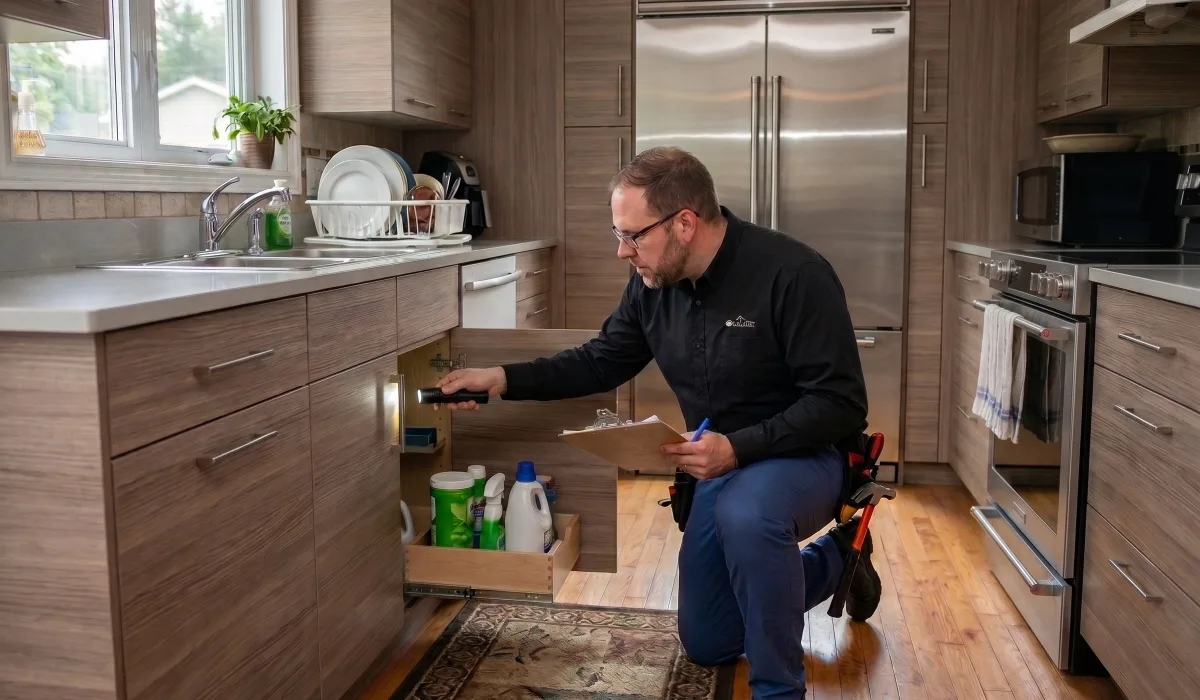
When homeowners think about kitchen renovations, they usually focus on colors, countertops, and layouts. From a home-inspection perspective, however, the more critical question is how well those cabinets will hold up after years of daily use.
During our home inspections across New Brunswick, kitchen cabinet failures are among the most common signs of aging renovations we encounter—especially around moisture-prone areas like sinks and dishwashers.
Why New Brunswick Climates Demand Better Cabinets
Cabinet failures in our region tend to repeat themselves in predictable patterns. New Brunswick homes experience intense environmental cycles: humid summers, dry heated winters, and drastic year-round temperature swings. In Fredericton-area homes especially, this seasonal moisture movement causes lower-density cabinet materials to warp, swell, shift, and weaken around fasteners.
Many of the biggest issues don't show up during the first few months in a beautiful showroom. They appear years later as swelling around sink bases, sagging shelves, failing hinges, and peeling finishes. To give this guide practical, industry-grade context, StructSure Inspections teamed up with Patrick Belding, Founder of BluePrint Cabinets, to break down exactly what goes wrong.
Homeowners are often frustrated because their kitchen looked spectacular at handover, but the underlying engineering wasn't built for long-term moisture and daily family life.
The Top 7 Cabinet Regrets and Failures Inspectors See
1) Swollen Sink Base Cabinets From Moisture Exposure
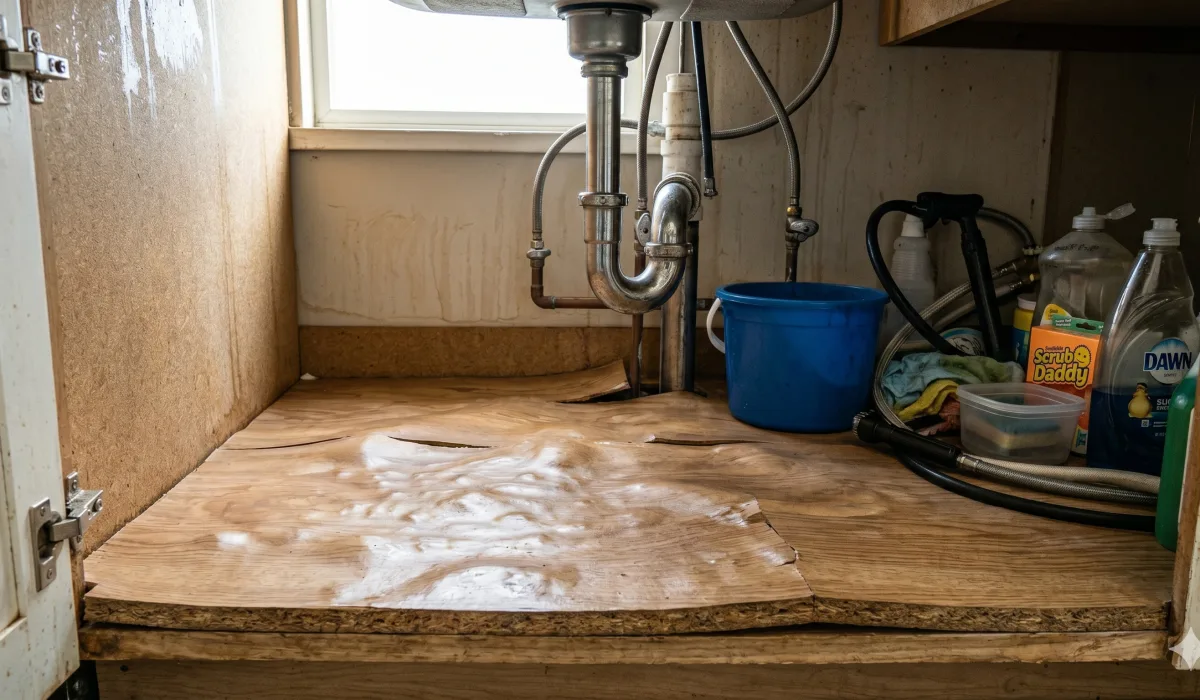
This is arguably the single most common failure found during home inspections. Even minor, slow leaks over time can cause lower-quality particle board to swell, soften, bubble, or delaminate. Once moisture penetrates the core of lower-density materials, the structural damage is usually irreversible. Plywood cabinet boxes tolerate long-term moisture exposure significantly better, particularly around sinks, dishwasher openings, and poorly ventilated cooking areas.
2) Sagging Shelves and Weak Cabinet Boxes
Shelves frequently begin to bow under the normal, everyday weight of dishes, heavy cookware, and small appliances. This is typically caused by thin shelf stock, long unsupported spans, low-density materials, or poor joinery. While two cabinets might look identical on day one, their internal engineering determines how straight they will stay after five years of use.
3) Peeling Thermofoil and Delaminating Surfaces
Peeling finishes are a staple in aging kitchens, almost always concentrated near ovens, dishwashers, kettles, and coffee stations. Direct heat and steam gradually break down the adhesives used in lower-grade thermofoil systems, resulting in unsightly bubbling, edge lifting, and visible separation from the door core.
4) Early Failure of Hinges and Drawer Hardware
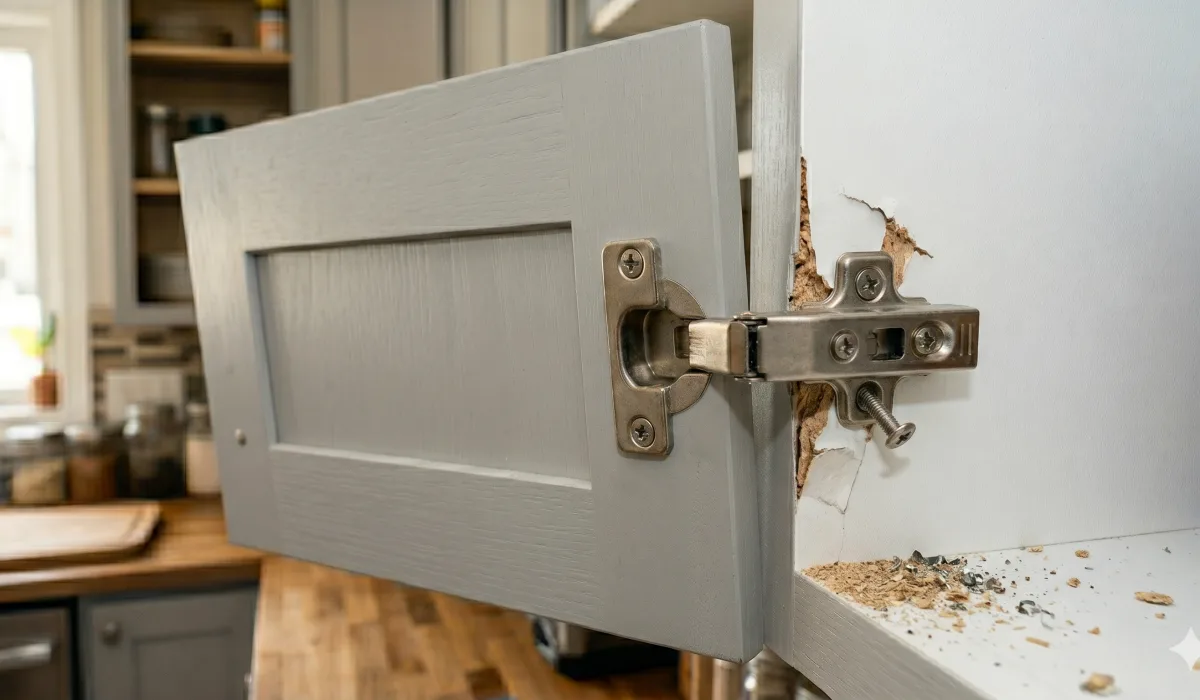
Hardware failure is the fastest way to make a kitchen feel cheap and worn out. During viewings, we constantly see loose hinges, sagging doors, stripped screw holes, and drawer slides pulling completely away from the cabinet walls. In most cases, the hinge itself isn't broken; rather, the low-density cabinet wall can no longer hold the screws securely.
5) Layout and Design Problems That Age Poorly
Not all cabinet issues stem from material failures—some are purely functional flaws. Common design misses include wasted corner space, oversized filler gaps, awkward pantry access, drawer-versus-appliance collisions, and poor island clearance. A kitchen can look stunning in a real estate photo and still perform poorly during the evening dinner rush.
6) Damage from Seasonal Humidity Shifts
Because New Brunswick's climate forces rapid expansion and contraction cycles, lower-grade materials are under constant physical stress. Over time, this movement loosens fasteners and pulls doors out of alignment. Choosing moisture-resistant construction and stable materials like plywood or properly sealed MDF is vital to combatting regional humidity.
7) The “Six-Month” Kitchen
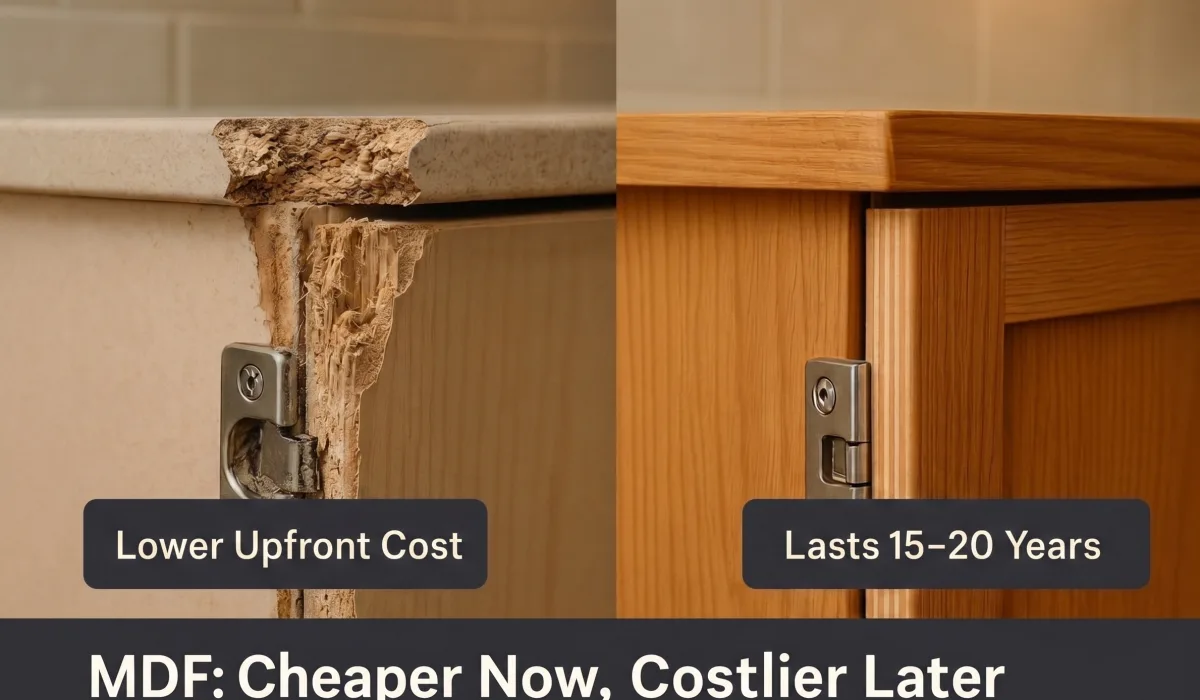
Many budget-oriented cabinets are designed to look perfect for the initial handover or a quick home flip, but they break down rapidly under real-world family use. Within months, chipped finishes, sagging drawers, and loose doors begin to emerge. The visual finish was prioritized, but the structural integrity underneath simply wasn't there.
Quick Guide: Common Cabinet Materials Explained
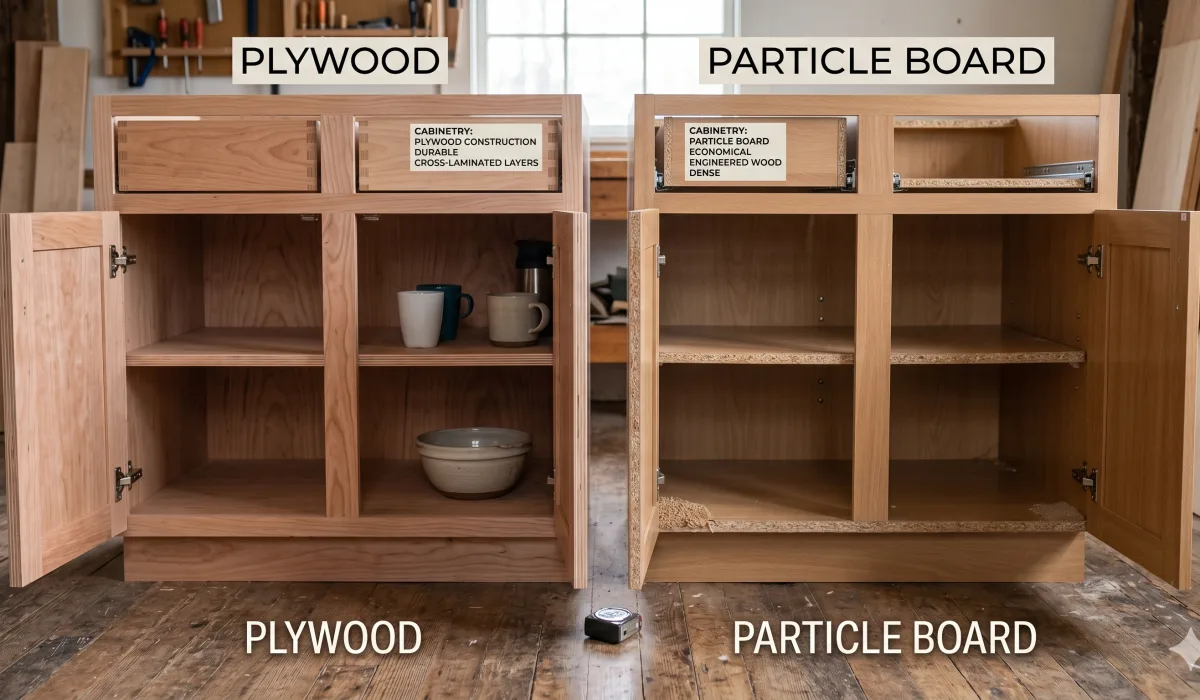
Particle Board: Highly affordable and common in mass-produced cabinetry, but exceptionally vulnerable to structural failure and swelling if it contacts water.
MDF (Medium-Density Fibreboard): Excellent for achieving a perfectly smooth, painted door profile. It performs wonderfully, provided it is thoroughly sealed and protected from standing water.
Plywood: Widely recognized as the premium option for cabinet-box construction, offering superior screw-holding power and excellent resistance to moisture and heavy loads.
Checklist: What to Look for During a Home Viewing
If you are touring a home for sale, keep an eye out for these red flags:
- Swelling or water staining under the kitchen sink and near the dishwasher.
- Soft or sagging cabinet floors directly beneath plumbing fixtures.
- Peeling or lifting thermofoil edges near the stove or kettle station.
- Sagging or visibly bowing shelves.
- Misaligned doors, loose hinges, or grinding drawer slides.
- Bubbling cabinet finishes or visible box separation.
Frequently Asked Questions
Final Thoughts
A kitchen renovation is one of the largest financial investments a homeowner can make. While paint colors and trendy finishes get the most attention, a kitchen's true lifespan depends entirely on what is underneath: the box construction, material density, hardware quality, and moisture resistance.
Buying or selling a home? Ensure your kitchen and plumbing are structurally sound by booking an inspection with StructSure Inspections.
Planning a renovation? Build a kitchen meant to last a lifetime by contacting the team at BluePrint Cabinets in Fredericton.
About the Contributor
Lewis Vandervalk and Patrick Belding are Co-Founders of BluePrint Cabinets in Fredericton, New Brunswick.
Lewis leads marketing, education, and homeowner-facing systems, while Patrick focuses on cabinetry execution, product quality, and long-term kitchen performance.
Visit blueprintcabinets.ca to learn more about BluePrint Cabinets.